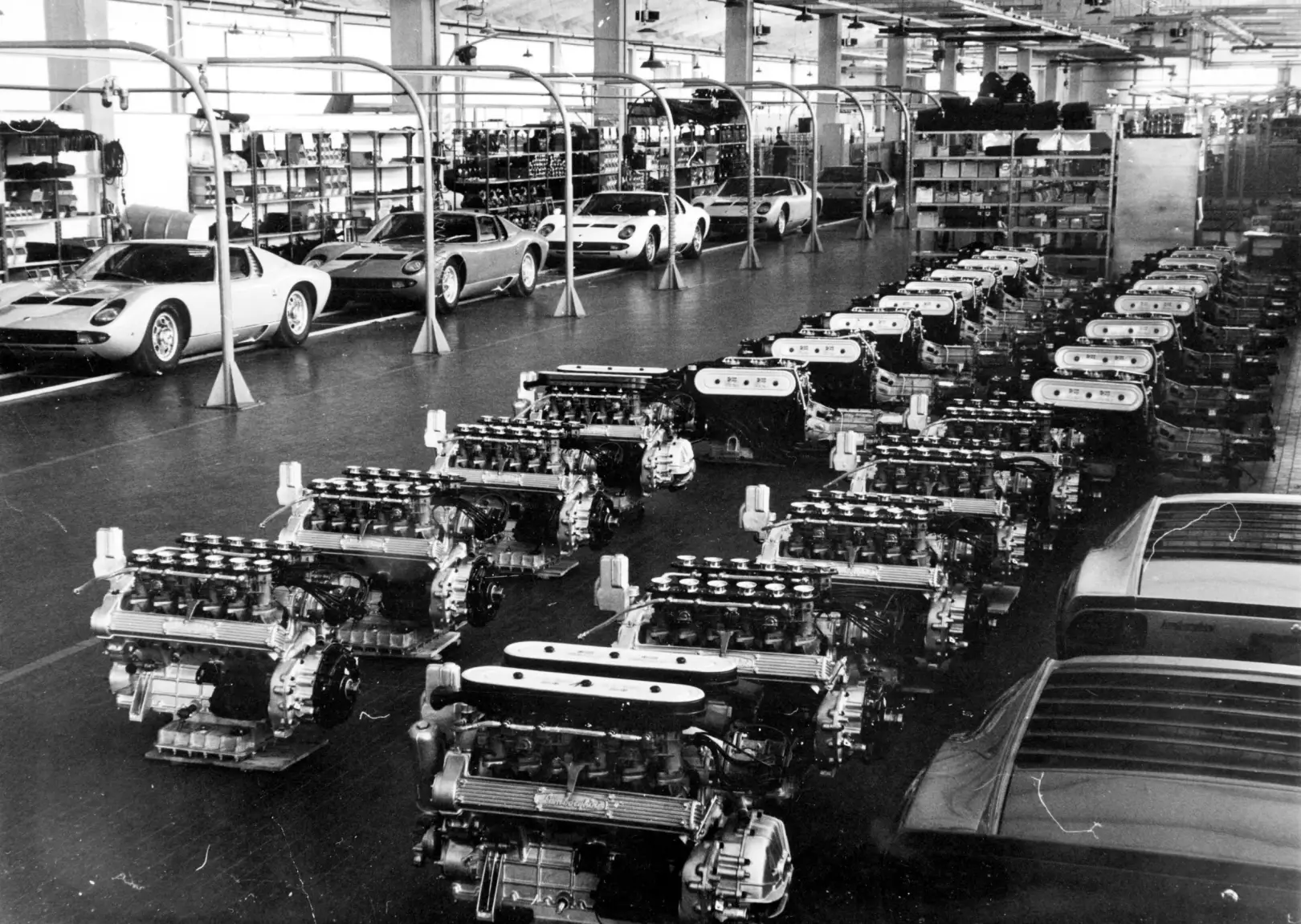
Sixty years ago this month, a sleek, orange car appeared on the Bertone stand at the Geneva Motor Show and changed everything. Lamborghini is celebrating the anniversary of the Miura, widely regarded as the world's first supercar.
When it was first unveiled on 10 March 1966, the Miura introduced a design that has come to define exotic performance cars to this day: a powerful V12 engine positioned transversely behind the driver. This concept was developed by a young team including Gian Paolo Dallara and Paolo Stanzani, who built a working prototype chassis and presented it at the Turin Motor Show in 1965. Ferruccio Lamborghini gave the project the green light, and Marcello Gandini of Bertone clothed it in one of the most beautiful bodies ever conceived.

The numbers still impress today. With up to 385 horsepower in its later SV form, the Miura could reach 290 km/h, making it the world's fastest production car at the time. More important than the statistics, though, is that the Miura established a template - mid-engine, V12 and exotic styling - that Lamborghini has followed through the Countach, Diablo, Murciélago, Aventador and, most recently, the hybrid Revuelto.
Only 763 examples were built between 1966 and 1973, meaning that every surviving Miura is a treasure. To celebrate the anniversary, Lamborghini's Polo Storico department is organising a dedicated tour through Northern Italy from 6-10 May. The car's cultural impact extended far beyond the showroom, with starring roles in films such as The Italian Job, and a colour palette offering buyers remarkable personalisation options decades before such choices became standard.
Six decades on, the Miura remains the benchmark for what a supercar should be: radical, beautiful and utterly uncompromising. While Lamborghini isn't looking back, CEO Stepha

 Sign in with Google