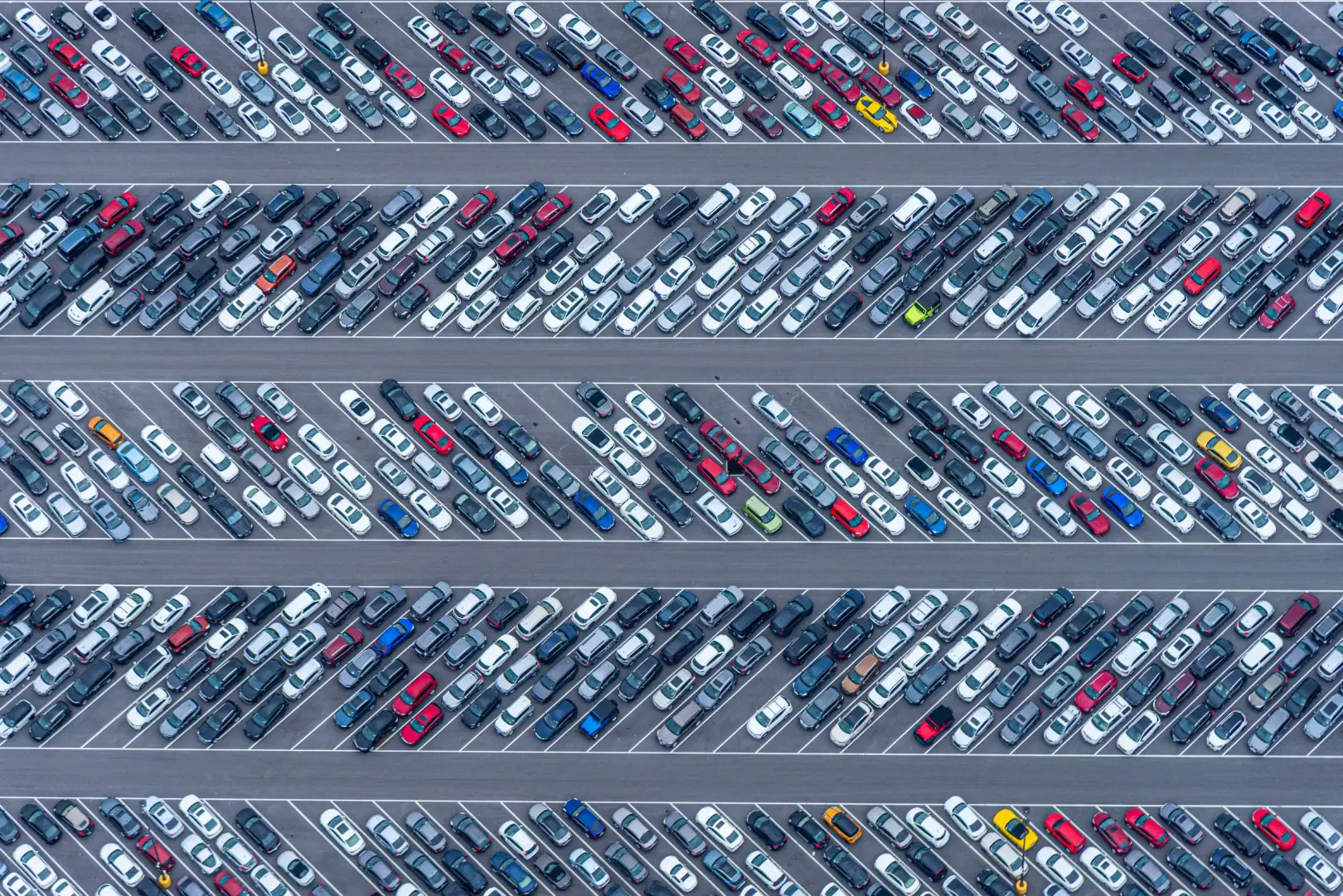
Most people think buying a used car is a straightforward process. The owner sells their car to a dealership, which lists it online for public purchase a few days or weeks later. This seems logical and for some vehicles, that is exactly what happens.
However, the reality is considerably more complex. Every working day, thousands of vehicles change hands across Europe without ever appearing on a public marketplace. Some are quietly traded between dealers. Many pass through professional auctions that are restricted to the trade. Others are exported to countries where demand is stronger. Behind the listings that consumers see, there is a much larger, largely invisible market that keeps the entire industry moving.
Welcome to the world of vehicle remarketing - the professional business of moving used vehicles between dealers, auction platforms, fleet operators and exporters. Understanding this market explains why so many cars never reach the public and why the ones that do have often travelled further than their buyers realise.
Not every trade-in fits the dealership that takes it
Imagine a customer walking into a premium German dealership to purchase a nearly new luxury SUV. As part of the deal, they trade in their fifteen-year-old compact hatchback. While the dealer is happy to accept the trade-in as it helps to close the sale, accepting a car is not the same as wanting to sell it on.
Every dealership has a target audience and a business model built around it. A sports car specialist wants performance cars. A premium franchise wants late-plate, low-mileage stock that matches its forecourt and brand standards. A family-car retailer wants practical, affordable everyday transport. A vehicle that does not fit this profile creates a problem rather than an opportunity: it ties up capital, occupies space and requires reconditioning work. The dealer would rather invest in cars that suit their buyers.
So the hatchback is taken in, valued against its trade price and then sold on - often without ever being advertised to the public by the dealer who accepted it. Instead, it enters the professional market.
The hidden dealer-to-dealer network
One of the least visible aspects of the industry is dealer-to-dealer trade. Dealerships are constantly buying and selling stock amongst themselves because a car that is unsuitable for one business may be perfect for another.
A franchise that takes in an ageing diesel estate car that it cannot sell might sell it directly to an independent garage that specialises in older, higher-mileage cars. In turn, that independent might pass on a low-mileage city car to an urban dealer who can sell it more quickly. Rather than spending time and money preparing a vehicle for a retail buyer who may never materialise, many businesses simply sell to other dealers and recycle the capital into stock they can sell quickly.
This process is continuous and rarely involves a single transaction. A vehicle may move through several businesses before reaching a private buyer.
Dealer auctions do the heavy lifting
A significant proportion of trade vehicles are sold at dealer-only auctions. Unlike public auctions, these platforms are restricted to verified automotive professionals, such as approved dealers, traders and exporters, who have proven that they are legitimate businesses. Members of the public cannot bid.
Dealer auctions solve the industry's core problem of matching the right vehicle to the right buyer quickly and efficiently. A dealer can list unwanted trade-ins and convert them to cash within days. At the same time, they can source replacement stock for their own showroom from hundreds or even thousands of other vehicles. For many dealerships, buying and selling at auction is not an occasional activity - it is an integral part of daily inventory management.
The format has changed dramatically. While traditional physical auction halls still exist, a growing proportion of trade now takes place online. Here, vehicles are sold based on detailed condition reports, standardised grading, photographs and documented histories, rather than on a quick walk around a car park. Online platforms remove geography from the equation, enabling a dealer in one country to buy from another without either party ever being in the same building. This shift is precisely what makes a genuinely pan-European trade market possible.
Why do cars cross borders?
Not every vehicle remains in the country where it was traded in. Demand for any given model, fuel type, colour or specification varies enormously from one European market to another and professional buyers capitalise on these differences.
A right-hand-drive car has little value in mainland Europe, but can be sold for a good price where it can be used or re-exported. A large petrol SUV may struggle in a market shaped by emissions-based taxation, yet sell well somewhere where the rules are different. A particular engine, trim or options package that is unremarkable in Germany may be scarce and in demand elsewhere.
Consequently, a significant proportion of trade vehicles are purchased by exporters who sell them across Europe and beyond. A car traded in in Germany today could be on a forecourt in Spain, the Netherlands or Poland within weeks. These transactions are complex, involving VAT treatment, registration paperwork, transport logistics and local compliance, all of which must be handled correctly, which is one reason why this work is firmly in professional hands. The end result is a market in which cars naturally flow towards regions where demand and therefore price, is strongest.
Fleet and lease vehicles rarely come into contact with the public first
Some of the largest volumes in the used car market never start out with a private seller. Leasing companies, daily rental businesses, contract-hire operators and corporate fleets cycle through enormous numbers of vehicles every year, returning them in waves as contracts end - a process known in the industry as 'de-fleeting'.
Attempting to handle these cars individually through retail channels would be hopelessly inefficient. When a fleet returns hundreds of vehicles in a month, it needs to dispose of them quickly and predictably. The overwhelming majority are therefore sold in bulk through professional auctions or directly to dealers and exporters. It is only later, after a dealer has purchased, prepared and priced them, that these vehicles appear on a forecourt for the public to see. By then, they will already have been through one or more professional transactions, which are invisible to the eventual buyer.
The economics: Time is really money
Underpinning all of this is a simple commercial calculation. Preparing a vehicle for sale is expensive and time-consuming. Before a car can be displayed on a forecourt with a price tag and warranty, a dealer usually has to:
- inspect it mechanically and assess its condition
- repair faults and replace consumables and tyres
- clean, valet and detail it to retail standard
- photograph and advertise it
- field enquiries, offer test drives and negotiate
- stand behind it with a warranty and aftercare
Each of those steps incurs costs and ties up the vehicle for days or weeks. For a car with thin retail margins, limited local demand or an unpopular model, the expected profit simply does not justify the cost and risk of preparing it for sale. Selling it quickly to a trade buyer - even at a lower headline price - frees up cash, space and staff time for stock that will sell faster and earn more. A trade sale is not a failure; it is often the smarter business decision.
There's a longer story behind every listing
It is worth taking a step back to see how different the actual journey is from what is assumed.
Most people imagine a straight line: owner → dealer → buyer. In many cases, however, what actually happens looks more like a chain: a trade-in becomes auction stock, which then becomes another dealer's inventory. That inventory might be exported or sold on to another dealer before finally being sold to a private buyer. Along the way, provenance, mileage and documentation are checked and re-checked, because each professional buyer is putting their own capital at risk.
By the time a car appears online, it may have passed through several businesses, one or two auction platforms, a transport company and possibly more than one country.
A market worth billions, hidden in plain sight
The professional vehicle trade is one of the largest yet least visible sectors of the automotive industry. Every day, vehicles are transferred between dealerships, auction platforms, fleet operators and exporters without ever being listed on a public marketplace and the value flowing through this channel amounts to billions of euros across Europe each year.
This hidden network is neither a quirk nor an inefficiency. It is a mechanism that enables dealers to source the right stock, dispose of unsuitable vehicles, manage trade-ins effectively and match every vehicle with the market most likely to want it. Without it, inventory would stagnate, capital would sit idle and the whole industry would operate much more slowly.
This is precisely the market that Breaqs was built for: a pan-European platform that connects verified dealers, traders and exporters so that the right vehicle can find the right professional buyer, wherever they may be. The infrastructure that used to depend on regional auction halls and personal contacts now operates across borders in a single location.
The next time you browse a listing:
The next time you see a car advertised online, think about its journey. There's a good chance that it didn't travel directly from its previous owner to the current dealer. It may have passed through dealer auctions, professional traders and transport companies, or even travelled through several countries, before appearing on your screen.
For most buyers, this journey remains invisible - and that is fine. For automotive professionals, however, it is simply how the modern vehicle market works.
Frequently Asked Questions
Because not every car matches their target market. Selling a vehicle that does not fit with a dealer's profile means tying up money and space for little return, so many trade-ins are sold to other dealers or through dealer auctions instead.
It is a marketplace restricted to verified automotive professionals, where dealers, traders and exporters can buy and sell vehicles within the trade - increasingly online - against detailed condition reports and standardised grading, rather than in a physical hall.
Generally not. These platforms are limited to approved automotive businesses and vehicle traders who have verified their credentials.
Demand varies widely across Europe. A model, specification or fuel type that is difficult to sell in one country may be in short supply and highly sought after in another, so professional exporters transport cars to areas where prices are strongest.
It is the industry term for the professional process of moving used vehicles - including trade-ins, fleet returns and lease returns - between dealers, auctions and exporters before they reach retail buyers.
Most are returned in bulk when contracts end - a process known as 'de-fleeting' - and are sold through professional auctions or directly to dealers long before any of them appear on a public forecourt.
Yes. Many vehicles pass through multiple businesses, auctions or countries before reaching their final retail owner.






 Sign in with Google